2nd edition
SeaWilding Conference
An ocean with rights: from knowledge to transformative action.
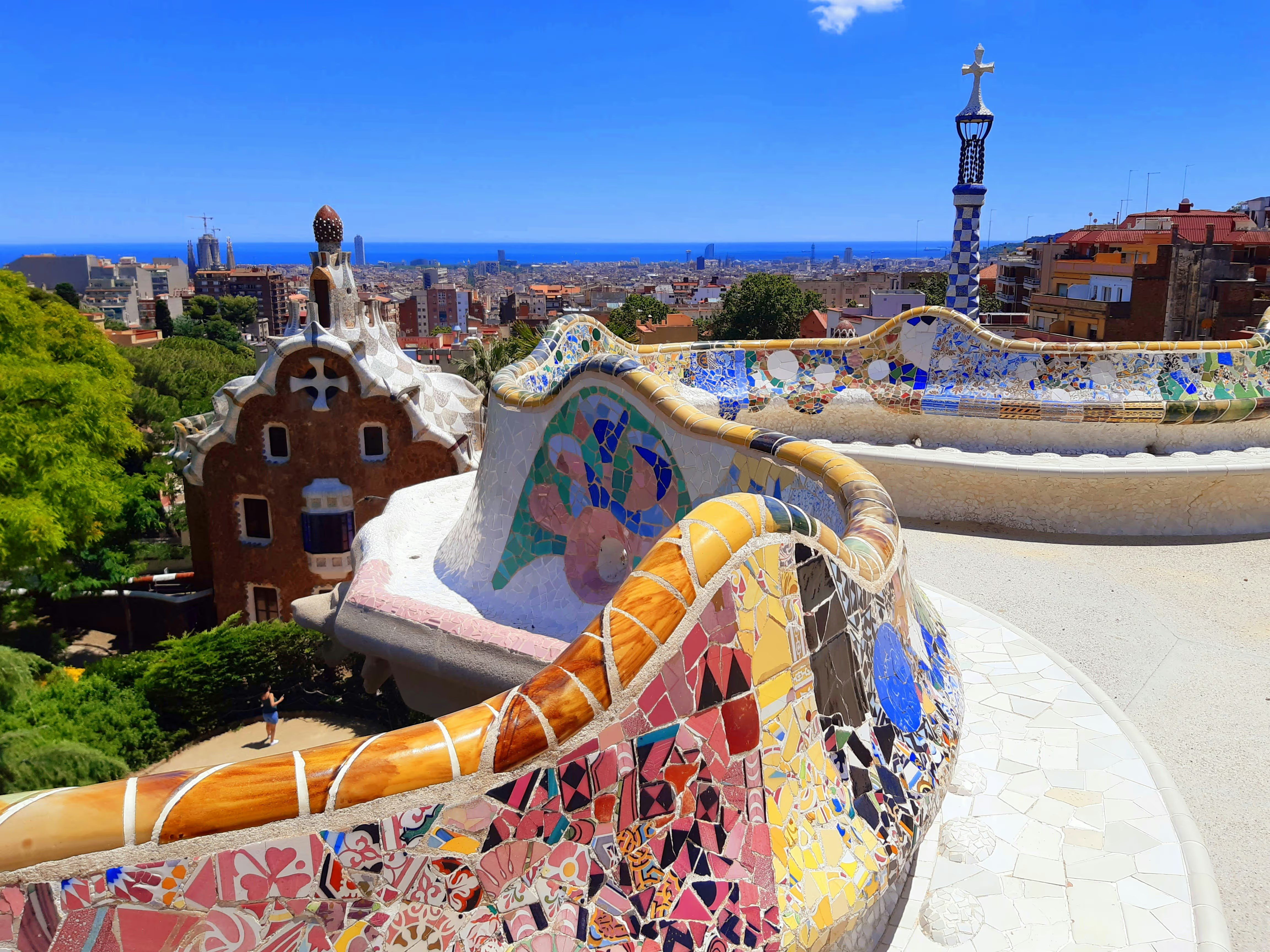
Barcelona · 28–30 October 2026









The SeaWilding Conference is the largest interdisciplinary gathering devoted to ocean conservation and restoration in Southern Europe. Its second edition returns to Barcelona from 28 to 30 October 2026 with a single through-line: the shift from ocean-as-object to ocean-as-subject.
Over three days, in a single auditorium and with no parallel sessions, the scientific community, legal scholars, managers, ethics specialists, funders and civil society build one shared conversation. It is structured around two axes —the IPBES Transformative Change Report and the Rights of the Ocean— under the principle of consilience: the unity of knowledge that makes it possible to move from diagnosis to action.
The aim is to translate scientific evidence and legal momentum into an agenda for restorative action, and to consolidate Barcelona as an international hub for marine conservation, in step with the UN Decade of Ocean Science, the Kunming-Montreal 30×30 target and the European Mission “Restore our Ocean and Waters by 2030”.
The IPBES Transformative Change Assessment Report (2024), produced over three years by more than a hundred specialists from 42 countries, defines transformative change as a deep reorganisation of visions, structures and practices. It identifies three root causes of nature loss —disconnection, domination and the priority of short-term profit— and proposes five strategies to reverse them. It is the scientific guide that structures the three days.
Applying the rights-of-nature framework to the sea: recognising the ocean as a subject with the right to exist, thrive, maintain its ecological integrity and be restored, regardless of its utilitarian value. An ecocentric, holistic approach, now reaching legal maturity, with solid precedents and a growing international movement.
The IPBES Transformative Change Report (2024) identifies three root causes of nature loss and proposes five strategies for a systemic reorganisation of visions, structures and practices. It is the backbone that orders the conference’s three days.
Applying the rights-of-nature framework to the sea: the ocean as a subject with the right to exist, thrive and be restored. From the Mar Menor precedent (Law 19/2022) to international case law and the BBNJ Treaty.
A dedicated line, in critical dialogue with the Rights of the Ocean: the sentience of marine beings, animal welfare and law, and communication for the defence of non-human animals. It activates the fifth IPBES strategy: transforming visions and values.
Active restoration and networks of effective marine protected areas: the co-management of Torre Guaceto (Mediterranean), the Azores MPA network (Atlantic) and the functional connectivity linking larval dispersal, spatial planning and network design.
The science of connection with nature and the links between the ocean and human health, under the One Health and planetary-health approaches. Reversing disconnection is a precondition for recognising rights and mobilising society.
How to make marine restoration financeable: aligning project scale, evidence of results and public policy with public de-risking mechanisms and catalytic philanthropic capital, drawing on real-world nature-based solution cases.
Consilient marine spatial planning, co-management and ocean justice, with territorial schemes for ecological restoration, within the framework of the Kunming-Montreal 30×30 target and the EU Ocean Pact.
Effective science communication and a transformative narrative that replaces the rhetoric of the resource with one of responsibility and reciprocity, focused on public participation and new generations.
Opening with IPBES, connection with the ocean and the Rights of the Ocean: from resource to subject.
Ethics, rewilding and MPA networks, habitat loss, connectivity, regenerative finance and marine governance.
The whole-of-society approach: coalitions, youth and citizen science. Pass the baton.
The SeaWilding Conference brings together some of the most distinguished and reputable experts in their field, who will share their knowledge, experiences and perspectives on different axes of progress and their implications in the field of ocean conservation and restoration.
Barcelona was chosen as the host city for its strong track record in ocean-science research, backed by leading institutions such as the Institute of Marine Sciences (ICM-CSIC) and an ecosystem of centres of excellence including the University of Barcelona (UB) and the Polytechnic University of Catalonia (UPC). This confluence of scientific institutions, political commitment, first-class infrastructure and a long maritime tradition makes Barcelona the ideal stage to catalyse the international collaborations needed to recover our ocean.